Composite Furniture Maintenance Tips: How to Keep Your Furniture Looking Great
Composite furniture has become a popular choice for outdoor patios and decks thanks to its weather-resistance, durability, and low-maintenance nature. However, while composite furniture is designed to withstand exposure to the elements, it still requires some basic care and cleaning to keep it looking like new. This article will provide helpful tips for properly maintaining your composite furniture investment, so you can enjoy your beautiful outdoor space for years to come.
Frequently Asked Questions About Composite Outdoor Furniture Care
It blends wood fibers with plastics for durability. Made from HDPE and wood fibers, composite furniture resists cracking, splinters, rot, stains, UV, mold, and mildew because color/UV inhibitors run through the material. It delivers the wood look with low maintenance—ideal for patios and decks.
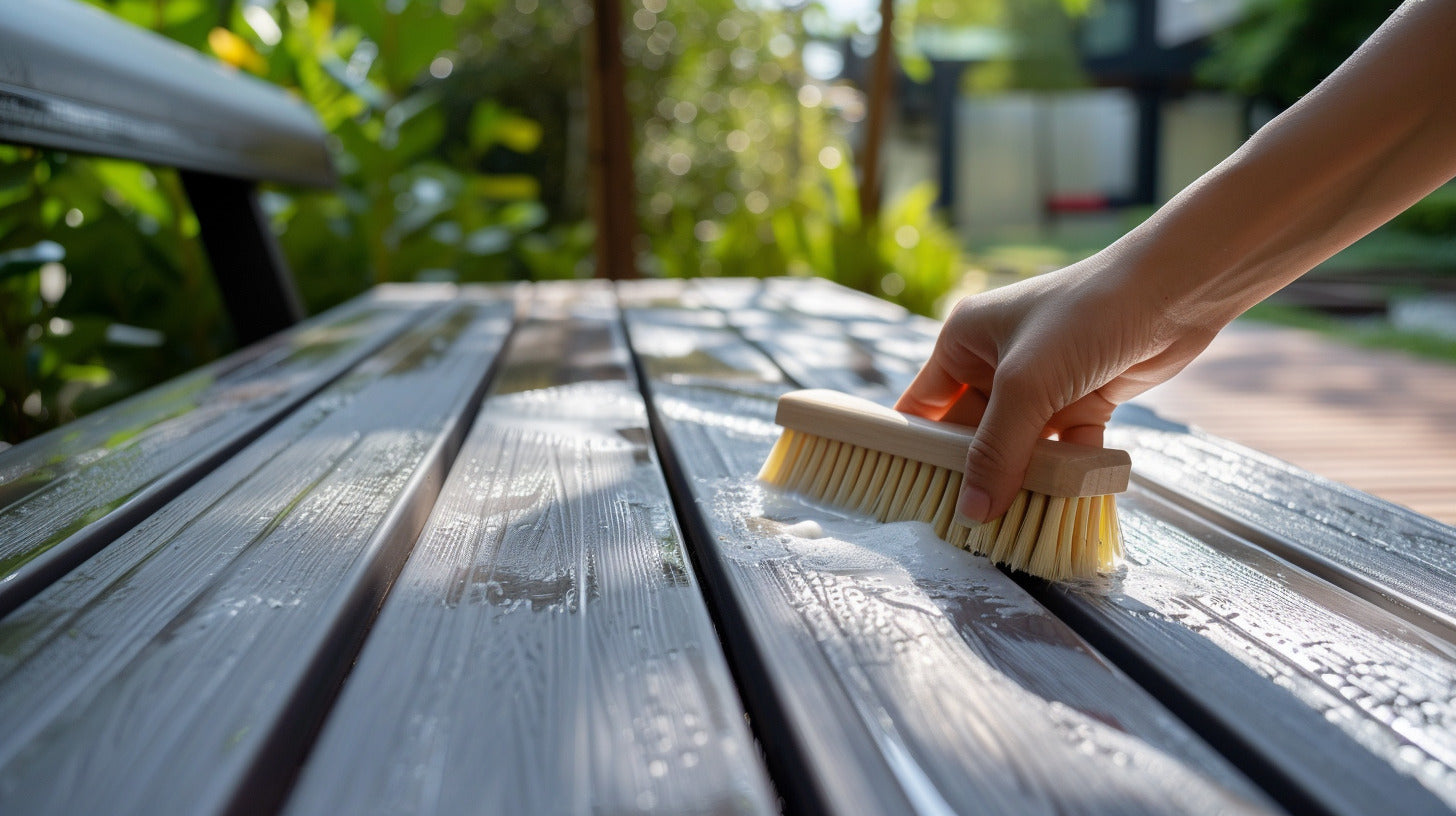
Clean a couple of times per season with mild soap. Brush off debris, then scrub with a soft brush and mild dish soap in lukewarm water. Rinse well and air-dry fully (don’t leave wet in direct sun). For very dirty pieces, vacuum first; remove cushions to wash separately and dry completely.
Use bleach solution, baking-soda paste, or a degreaser. For stubborn marks, use warm water + mild soap + 1 cup bleach. Dried stains: apply baking-soda paste for 10–15 minutes. Grease/oil: spot with WD-40 or Goo-Gone. Always spot-test; avoid acetone/paint remover and harsh chemicals not approved for HDPE.
Keep it clean, dry, and well-ventilated. Let pieces dry fully before covering or storing; use breathable covers with airflow. Remove organic debris quickly, wash chairs periodically, and spot-clean at first signs of growth—especially on undersides or where furniture sits on damp ground.
Wash gently and dry completely before reuse or storage. Remove cushions and launder with mild detergent per tag; air-dry fully. Store cushions or removable slings indoors over winter to prevent moisture issues and extend longevity.
Inspect in spring; deep-clean before winter covers. Spring/Summer: check for winter damage; clean tables and wash cushions. Fall/Winter: clean thoroughly before covering, ensure ventilation, store cushions indoors, and consider a waterproof protectant spray.
Tighten hardware and address issues early. During cleanings, inspect bolts and screws; tighten or replace corroded hardware. Regular cleaning and prompt stain/mold treatment prevent bigger problems—small, consistent care leads to years of outdoor enjoyment.
Understanding Composite Furniture
Unlike traditional wood furniture, composite furniture contains wood fibers, plastics, and polymers blended together using heat and pressure to create a durable, resilient material that won't crack, splinter or rot. Modern composite furniture has only been around since the 1990's, and the most common type of composite furniture is made from high-density polyethylene (HDPE) mixed with wood fibers, giving it the look and feel of real wood.
Composite furniture is also stain, UV, mold and mildew-resistant, since the color and UV inhibitors are infused throughout the material (not just coated on the surface). This makes it ideal for resisting Mother Nature's effects.

Regular Cleaning
Even though it's made to handle the outdoors, it's still important to clean your composite furniture regularly to prevent the buildup of dirt, pollen, debris, and environmental pollutants. Here are some tips:
- For routine cleaning, use a soft bristle brush and a mild detergent like dish soap mixed with lukewarm water. Avoid abrasive cleaners or scouring pads that could scratch the surface.
- Allow furniture to completely air-dry after rinsing to prevent water spots. Don't leave wet furniture in direct sunlight.
- Take off removable cushions and wash separately if needed. Use mild laundry detergent and allow to air dry completely.
- First vacuum furniture with brush attachment to remove any loose dirt or debris if the furniture is really dirty.
- When cleaning, inspect hardware (bolts, screws, etc.) and tighten or replace if they're loose or corroded.
It's a good idea to clean your composite patio set at least a couple times per season. High traffic areas may need cleaning more often.
Removing Stains, Spills & Tough Grime

Accidents happen, and Composite furniture is prone to spills from food, drinks, plant pots, bird droppings and other outdoor living messes. Here are some tips for removing stains and tough grime:
- Mix warm water, mild dish soap and 1 cup bleach to make a cleaning solution for removing stubborn stains and discoloration.
- For dried-on stains, try making a paste with baking soda and water. Apply paste and let sit for 10-15 minutes before scrubbing and rinsing. The baking soda will help lift stains from the surface.
- For food, grease or oil stains, spray stain directly with a de-greaser product like WD40 or Goo-Gone. Then wipe clean.
- Avoid using acetone, paint remover, or other strong chemicals not approved for HDPE furniture. Always spot test cleaners on underside surface first.
Preventing Mold & Mildew Growth
Composite furniture won’t rot or decay like wood, but it can still be subject to surface mold and mildew growth when left dirty or stored wet.
| Do’s | Don’ts |
|---|---|
| Allow furniture to dry completely after cleaning but before covering or storing | Don’t leave furniture wet or damp for prolonged periods |
| Use protective covers and ensure good ventilation if storing furniture when not in use | Don’t cover furniture immediately after cleaning without letting it dry first |
| Check undersides of furniture that sits directly on grass or damp patios | Don’t allow organic debris like grass clippings or leaves to remain on furniture surfaces |
| Periodically wash chairs with mild detergent | Don’t allow bird droppings or tree sap to remain on furniture |
| Spot clean affected areas immediately at first sign of mold/mildew | Don’t ignore early signs of mold/mildew growth |
| Use above bleach cleaning solution or commercial mold/mildew remover | Don’t let mold/mildew stains set in and penetrate material |
Addressing mold and mildew promptly (before it can spread or penetrate into material) is key.
Year-Round Care Tips
Caring for your composite furniture properly throughout the seasons is important for maximum longevity.
Spring/Summer:
- Inspect furniture for any winter damage after uncovering
- Wash fabric cushions before their first use and allow to completely dry
- Clean table tops and prepare outdoor space for entertaining
Fall/Winter:
- Clean furniture thoroughly before covering to prevent mold/mildew growth
- Ensure good ventilation if covering furniture; use breathable furniture covers
- Consider storing cushions or removable slings indoors over winter
- Waterproof protectant spray can be applied for added protection
With the proper care and a regular cleaning regimen, quality composite patio furniture can provide many years of outdoor living enjoyment. Also, be sure to consult the furniture manufacturer's care instructions for any product-specific maintenance tips.

Caring Now Means Relaxing Later
I hope these composite furniture care and cleaning recommendations have shed some light on properly maintaining your outdoor living investment. The most important thing is to clean it regularly and address any issues promptly before they have a chance to become a bigger problem. Composite outdoor furniture will provide years of lasting performance with just a small amount of periodic care and attention on your part.
Now pull up a chair, kick back with your favorite drink, and enjoy the start of a new outdoor living season! Here's to many more happy years enjoying life outdoors with family and friends. Cheers!