8 Keys to the Perfect Patio Furniture Arrangement
Don’t try to arrange your patio furniture without reading these tips! Tired of rearranging your furniture over and over again? We’ll, I’ve put together this list of patio arrangement tips to help you get it right the first time.
Read through this list and then draw out your layout on paper. Being able to visualize what you want will make your life a lot easier! You don’t have to produce blueprints but just getting a rough shot will put you miles ahead of the game. If you have questions about your specific arrangement, you can send me your questions by filling out a comment at the bottom of the article. Now let’s arrange some patio furniture!
FAQs: How to Arrange Patio Furniture
Sketch your layout and pick a focal point first. Read through the tips, then draw your layout on paper. Create a focal point—think conversation set, fire feature, or built-in seating—to anchor the space. Build the rest of the décor around it so guests have a central spot to gather and mingle.
Decide purpose; choose symmetry vs. asymmetry. Symmetrical arrangements feel formal; asymmetrical reads relaxed and casual. Define how you’ll use the patio—entertaining, dining, lounging—and place pieces to serve that purpose. For dining-focused spaces, orient seating to face the table.
Allow 30–48 inches (about 24 inches in lighter areas). Plan clear, unobstructed paths. In high-traffic zones allow roughly 30–48 inches; you can trim to about 24 inches where there’s less movement. Guide guests around, not through, the main seating. Use buffers, dividers, or planters to steer flow.
Anchor the longest sofa along the longest edge. Place the longest piece—often a three-seat sofa or loveseat—along the longest wall/edge, facing the focal point, to make the area feel larger and grounded. Add a few individual chairs and cluster pieces into functional groupings.
Separate cooking from seating and dining. Keep the cooking zone distinct for safety and clarity. Use a small divider, freestanding bar, or different ground surfaces. Site the kitchen near the home’s entrance for convenient access to and from the house.
Divide into zones for different activities. Break up big spaces into areas for dining, lounging, sunbathing, or games. Define zones with umbrellas, process lighting, planter beds, or hardscaping to add interest, intimacy, and function.
Add side tables, ottomans, décor, lighting, and smart storage. Use side tables, ottomans, rugs, pillows, greenery, and lighting to bring a resort-style feel. Add cushion storage or an outdoor cabinet/closet, keep frequently used items within easy reach, and rearrange occasionally to refresh the space.
Use this as your foundation and explore further to learn the 8 essential keys for arranging patio furniture perfectly.

8 Rules of Thumb for Arranging Patio Furniture
No more asking wondering “how do I arrange my patio furniture?” Just make sure you follow these simple rules to create the perfect patio layout.
1. Decide on a Focal Point
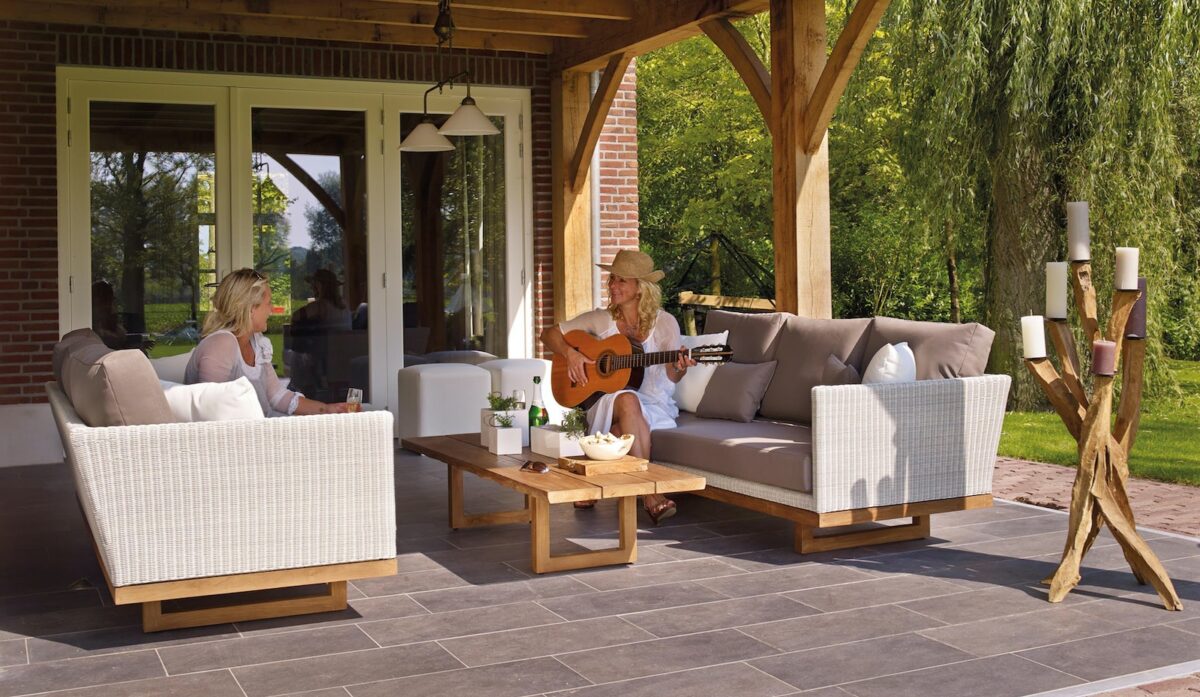
Create a focal point, like this 5 pc Urbana Sofa Set that will anchor your outdoor space. This will serve as the primary gathering point and the heart of your patio arrangement. The remaining decor will be built off of this area.
Consider a conversation set, fire feature, or built-in seating area to serve as your focal point. This will give guests a central spot to gather and mingle.

2. Find a Purpose for Your Patio
Symmetrical patio furniture arrangements create a formal living space while asymmetrical arrangements are a bit more quirky and have a much more lax, casual feel. Pick which one you intend on creating.
Consider how you plan to use the space - for entertaining, dining, lounging, etc. Arrange pieces accordingly to serve that purpose. For example, if mainly for dining, orient furniture to face a table.

3. Design Like a Traffic Conductor
When deciding on the layout of your patio deck, make sure you direct the flow of traffic in a way that eases congestion. Think about the way that guests will enter and exit the space. Is there a clear and unobstructed path? Are there areas that will likely become crowded? For best practice, I recommend allowing 30′′-48′′ of space for high traffic areas. You can cut this measurement down to 24′′ for areas that receive less foot traffic.
PRO TIP: Arrange your patio furniture in a way that directs guests around the primary seating area rather than through it. Nothing is more irritating than “excuse me, pardon me” while you’re getting to the butt of your joke. No pun intended!
Consider placing buffers, dividers or planters to help guide traffic flow if needed. Rope off areas that should remain clear.
4. Placement of Outdoor Furniture
Place the longest piece of furniture along the longest wall/edge, facing the focal point. This will make the area feel larger and anchor it, rather than having visually "floating" furniture. Typically the longest piece will be a 3 seat patio sofa or love seat. Adding a few individual chairs encourages guests to take a seat and chat.

Cluster pieces into functional spaces based on the intended use - a dining set, seating around a fire feature, a sunbathing station, etc.
5. Make it Feel Like You’re at Home
Bring the resort-style feeling to your backyard with convenience pieces like side tables, ottomans, and additional seating options. These give guests spots to set down drinks, plates, and bags and provide flexible seating.

Don't forget decor elements too - rugs, pillows, greenery, and lighting all make a patio feel homey.
6. Separate the Outdoor Kitchen
Keep the cooking area distinct from seating/dining. A small divider creates separation to differentiate spaces. This also addresses safety, separating grilling areas from where people will gather.
Consider a freestanding bar area, a short wall/fence, or different ground surfaces (pavers near grill, stone elsewhere). Site the kitchen near the home's entrance for convenient access.

7. Divide and Conquer
Break up larger spaces into multiple zones for dining, lounging, sunbathing, games, etc. This creates dimension rather than one wide open area. Add interest and functionality with umbrellas, process lighting, planter beds or hardscaping.

Defined spaces help differentiate functionality and prevent large open areas from feeling empty. Separate spaces also provide some privacy and intimacy.
8. Accessorize and Organize!
Accessorizing completes the designer look while adding convenience and function. Incorporate planters, greenery, throw pillows and decor items like lanterns or statues. Things like cushion storage helps keep items tidy and protected.

Consider an outdoor cabinet or closet to neatly tuck away extra cushions, blankets, games, etc when not in use. Place items you use most often in convenient spots for easy access.
Conclusion
Rearranging over time breathe fresh life into your patio. Adjust furniture occasionally to change it up. This list covers key tips for laying out your space properly to maximize enjoyment. Follow these patio arrangement guidelines as a starting point, then tweak and perfect as you use it. Don't forget to ask if you need help - I'm happy to provide suggestions.